Google
 

17 June 2013

Slight Advantage

In the Encyclopedia of Chess Openings, there are main lines, secondary lines, variations, and sub-variations. Each stem in the tree ends with an evaluation. ECO code C53 is one of the codes for the Giuoco Piano. C53 has four lines. One of the variations in line one ends with this position.

Black to move

ECO gives the evaluation that White has a slight advantage. What is the nature of this advantage? What is the basis for the evaluation?

Black's light-squared bishop may have difficulty getting into the game. Nor is Black's knight particularly active. White's pawns and pieces occupy the center and appear slightly more mobile than Black's.

This position appeared once in over-the-board play, according to the ChessBase Online Database. This one occurance is referenced in ECO: Gyimesi -- Acs, 1996 in the championship of Hungary. White won in 72 moves. Did the result of the game affect the theoretica evaluation?

14 June 2013

Pattern Recognition

In a bullet game* yesterday, I had a position that I recognized immediately from my work on Andre Danican Philidor.

Philidor was of the opinion that a gambit played well on both sides should result in a draw, but he demonstrates many ways that it is possible to err. In his first King's Gambit model game in Analysis of the Game of Chess (1790), he offers a variation on his main game in brief comment.

After the moves 1.e4 e5 2.f4 exf4 3.Nf3 g5 4.Bc4 Bg7 5.h4, he gives 5...h6 with the comment:
There were two other ways of playing this; the first, by pushing his King's Bishop's Pawn one step, in which case you should sacrifice your Knight, in order afterwards to give check with your Queen, which would insure you the game; ... (Philidor, 65)
His suggestion became one of my tactics exercises for the youth players.**

White to move

One of my bullet games yesterday was a King's Gambit, but some of the moves differed from Philidor's example. The essential pattern, however, was the same when my opponent made the error mentioned by Philidor.

1.e4 e5 2.f4 Nc6 3.Nf3 exf4 4.Bc4 g5 5.d4 f6??

White to move

6.Nxg5! fxg5? 7.Qh5+ Ke7 8.Qf7+ Kd6 9.e5+ Nxe5

White to move

10.dxe5+ is an inaccuracy.

I should have played 10.Qd5+ Ke7 11.Qxe5#. Having instantly seen one pattern from my tactics problems, I missed another. I missed a checkmate that is the solution to one of the tactics problems that I extracted from Greco.

White to move

White checkmates in four moves.

After my error, my opponent was cooperative and stepped back into a mating sequence.

10...Kc5? (10...Kxe5 hangs on longer) 11. Qd5+ Kb6 12.Qb5#

Fifteen seconds of fun seduces me into believing that bullet can be useful reinforcement for pattern training.

Another game yesterday that featured a pattern resembling one that can be found in Greco reveals the sort of junk that is the norm in bullet.

1.e4 b5 2.f4 Bb7 3.Nf3 b4 4.d4 Bxe4 5.Bc4 Bb7 6.Bxf7+?? Kxf7 7.Ne5+ Ke8 8.Qh5+ g6 9.Nxg6 hxg6?? 10.Qxg6#


*I had given up bullet because it hinders my quest for improvement. But, earlier this week in a discussion on a chess.com forum about internet lag and premove and how it affects the game clocks in online play, I played some bullet to document the discrepencies via video. See "Bullet Junk".

**My annual youth chess camp is next week. For this camp, I always create a new workbook with fresh tactics exercises. Each year, I pick one or a few chess players. The annotated games and tactics problems in the student workbook comes from the games of these players. I have built the camp around the games of Adoph Anderssen (2010) and Vasily Smyslov (2011). Last year, I featured a different player each day of camp: József Szén, Paul Morphy, Mikhail Tal, Alexander Chernin, and Yasser Seirawan.

This year, I have taken to heart Max Euwe's assertion, "the development of a chess player runs parallel with that of chess itself" (The Devopment of Chess Style, 1966). Hence, I have gone back to early chess masters and spent a bit of time looking through the games of Pedro Damiano, Ruy López, Gioachino Greco, and Andre Danican Philidor. My camp workbook this year features lessons from Greco and Philidor. Because some of Greco's games were copied from Damiano and López, their influence is present.

From William Lewis, Gioachino Greco on the Game of Chess (1819), I expanded my database of Greco's games. Do not believe that his total number of illustrated games comes to 77 as someone wrote in Wikipedia. That number comes from Louis Hoffmann (pseudonym for Angelo Lewis), The Games of Greco, 1900. Hoffmann reduces the number of variations that are found in the Lewis book to expand the number of "games" from 47 to 77. However, as Lewis explains, he combined separate games in Greco's manuscripts, organizing them by openings. What Greco has as separate games, others have reproduced as games and variations. Rendering these as separate again expands the number to 168. Most of the variations (games) are not in modern databases.


12 June 2013

Philidor on Gambits

I am reading some old chess books, and entering their games into my database. The ChessBase Onine database (the largest, to my knowledge) lacks many of these classic instructive games from the works of Pedro Damiano, Ruy Lopez, Gioachino Greco, and even François-André Danican Philidor. Last night, I posted a snippet concerning en passant from the 1750 edition of Philidor's Chess Analysed. This morning, I have been going through some of Philidor's notes on the King's Gambit.

Many writers have made reference to Philidor's views that a gambit defended against well leads to a draw. It may be of interest to read Philidor's actual words.
[A] Gambit equally well attacked and defended, is never a decisive party on either side; it is true that he who gives a Pawn has the pleasure of always having the attack, and the prospect of winning, which would be a certainty, if he who is on the defensive did not play regularly well for the ten or twelve first moves.
A. Danican Philidor, Analysis of the Game of Chess (London, 1790), 71.
I was unable to find this assertion in among Philidor's analysis of gambits in the 1750 edition.

11 June 2013

Logic of En Passant

Philidor's Fable

François-André Danican Philidor (1726-1795) was ahead of his time in positional understanding. He also had strong views concerning the rules of chess at a time while there were still local variations. In parts of Germany, for instance, Philidor reports that the en passant capture was not observed. He expressed his outrage with a clear statement concerning the necessity for the en passant rule once pawns were given the power of advancing two squares on their initial move.
[T]hey give a pawn leave to pass beyond taking by Pawns; which not only makes quite a different Game from the original one, but also takes off a great deal of its Beauty; because by this means a Pawn may pass before two others, who with much Dexterity and Industry have reached within three Squares of becoming Queens, and are there stopt by the King, or the Adversary's Bishop; while this single Pawn will either go and make a Queen, or oblige you to abandon all your advanced Pawns and come attack this Wretch, who during the whole Game has done nothing. This certainly is quite opposite to the Rules of war, where Merit only can advance a Soldier's Fortune.
Philidor, Chess Analysed (London, 1750), vi-vii.
It would be much better to let one of the worthy pawns who has labored throughout the course of the battle to strike down the lazy upstart. For this reason, Philidor seems to say, we permit capturing a pawn en passant. It is a good rule that ought to be observed everywhere.

09 June 2013

Understanding Defensive Resources

Problem 147 in level 3 of Chess Quest gave me some trouble this morning. Spotting the sacrifice to open the h-file took me a few seconds, but after that the problem became more complicated. In retrospect, the ability of the knight on e5 to cover h8 from g6 should have been obvious.

White to move

The main solution in the Chess Quest app is 1.Nxh5 gxh5 2.Nd5

White's second move accomplishes several things: discovered attack on the troublesome knight, interference along the a8-h1 diagonal, and attack of the Black queen.

Chess Quest has two responses for Black.

a) 2...Ng4 is the main line

b) 2...exd5 is the alternate line

Neither of these moves are the top choices of the engines I employed in my effort to comprehend the problem after multiple tries were necessary to solve it on the iPad.

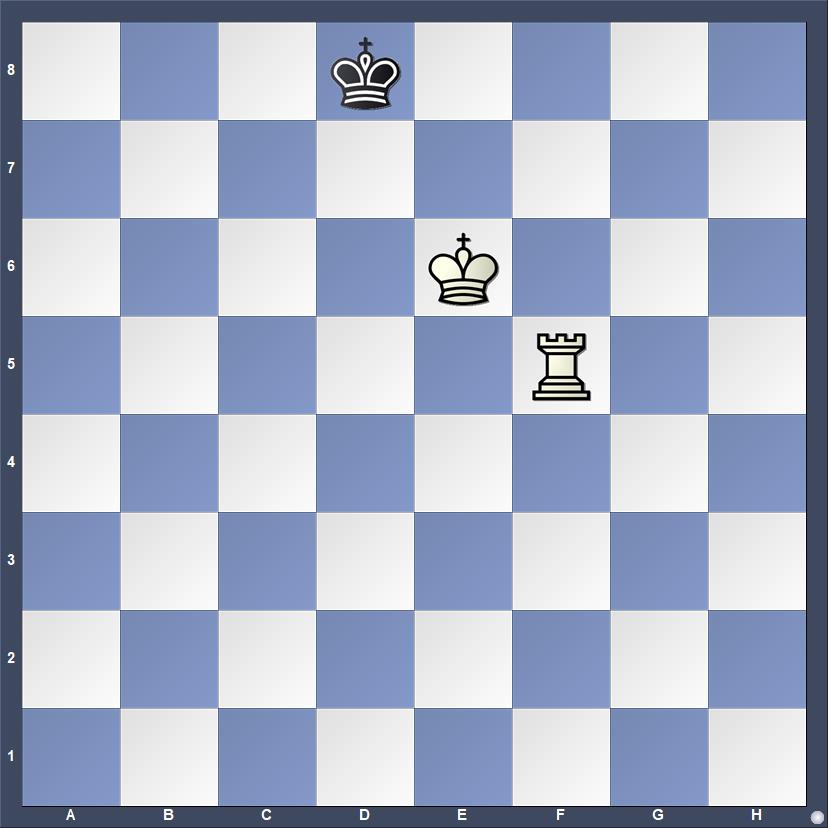
Houdini 1.5 played 2...Ne3.
White to move

I first tried 3.Nxc7 and lost my way after 3...Nxd1 4.Bd4 Ng6 5.Nxe8 Rc1 6.Bf1 e5 7.Bxb6 Rc3

White to move

Taking the queen maintains an advantage, but Black is able to complicate matters enough that my humanity reveals itself through errors in battle with the silicon beast.

I fared better against the machine with 3.Rxh5 Ng6 4.Rh6 e5 5.Nxc7 Rxc7 6.Rxg6+ fxg6 7.Qxe3

Black to move

With Black's pesky knights gone and the queen removed at the opportune time, White has a clear advantage and Black has limited counterplay.

Chess Quest's main line continues 2...Ng4 and White must stop the threatened fork. 3.Rf1 exd5.

Black has other moves that delay checkmate more moves. These are spite threats that give away major pieces. In terms of the problem themes--h-file penetration, and Black's efforts to control h8--3...exd5 is almost as good as anything else. Perhaps, however, 3...Ne5 might have been entered into the sequence by the creator of the problem.* White must then play 4.Bxe5 before proceeding along the h-file.

The main line concludes 4.Rxh5 Bg7 5.Rh7 and White is winning.

The alternate line tests the solver's understanding of the importantance of the knight on e5.

2...exd4 3.Bxe5 (3.Rxh5 Ng6 leads to a winning position for Black) 3...Rxe5 4.Rxh5 h-file penetration is now or never 4...Bg7 5.Rh7 Kf8

White to move
After 5...Kf8
 5...Kf8 is a subpar move. Black puts up more resistance with 5...Rxg5.

Unfortunately, Chess Quest rejects 6.Rh8+ in favor of 6.Rxg7, while both moves lead to checkmate on the following move. After 6.Rxg7 Ke8, Chess Quest accepts only 7.Qh8+. According to Stockfish 2.3.1, this move is the ninth best. 7.Rg8# is obviously best. 7.exd5 leads to the second fastest checkmate.

After 7.Qh8+ Chess Quest's line continues 7...Kd7 8.Rxf7 Ke6 and now White has three routes to checkmate in five moves. Chess Quest accepts only 9.Bh3+.

Chess Quest also has 8...Kc6 9.Rxc7+ (exd5+ is a better move, but not accepted by the app).

The problem is well-designed for highlighting defensive resources in a battle against an h-file battery, and for understanding that checkmating the king takes precedence over gaining material. Alas, the errors in the alternate solution confuse this message.


*Chess Quest "About" claims the GM Leonid Yudasin created the problems.

07 June 2013

The Knockout Blow

Tactics training emphasizes winning material to gain an advantage or sacrificing material to deliver checkmate. Occasionally, problems are presented where one must find the most efficient win from a position where most routes lead to victory. In the Spanish Thematic rapid tournament last night, I found the correct moves when the tactical opportunities presented themselves in the first two rounds. In the third, my opponent create chaos to test me, and I mostly failed.

My opponent could have had an advantage with 24.Nxd5, but erred with 24.Bxd5.

Black to move

In round two, I attacked my opponent's queen with 14.Ne4, to which he should have replied 14...Qd8 with a slight disadvantage. He played 14...Qg6, opening the door to tactics.

White to move

Game three was completely nuts, but not without instructive value.

The first position from game three was one that I anticipated during the game, but did not occur. I did not see that Black would have had a checkmate in eight.

Black to move

I considered, but did not play the strongest continuation after 15.g4.

Black to move

And then after 17.Qc2, I missed a forced checkmate in seven.

Black to move

Finally, though, I found the five move checkmate sequence after 21.Qxc7, ending the game and the tournament.

Black to move

06 June 2013

Where's the Lesson?

Yesterday, I played five online blitz games, the most since my last binge last week. Today, so far, I have exercised self-discipline. After some work on the Spanish Opening in preparation for my lecture at the Spokane Chess Club this evening, and making my moves in some correspondence games, I played a single game of blitz.

My errors gave me an uncomfortable position where I tried a desperate ploy.

Black to move

I am down a pawn and my opponent's pieces are better coordinated. In hopes of gaining back the pawn, I offered my bishop.

21...Bh3!?

White can easily refute my play with a fork, 22.Qh4, or by defending the knight, 22.Rd3. Instead, he made the worst possible move.

22.Ne5??

Perhaps there is a lesson for beginners in the resulting position. The resulting checkmate pattern is one that all chess players should know. My opponent might also examine the cause of his chess blindness.

Of more value as a lesson from this game, however, are the series of inaccuracies that gave White a strong advantage, and White's subsequent inaccuracies that kept Black in the game.

I blundered early with 13...Nd5??

White to move
After 13...Nd5??
For a couple of moves, my opponent exploited this error in the correct manner.

14.Bxe7 Qxe7 15.Nxd5 exd5

Then, however, he missed the simple discovery that leaves me helpless, and that would have provoked my resignation, 16.Ng6!

16.Qxd5 Be6

White to move

Here, again, a simple discovery ends Black's illusions of being in the game. Instead of the correct 17.Nc6 bxc6 18.Qxe6+, White continued with more inaccuracies.

17.Qe4 Qf6 18.Nf3 Bf5 19.Qc4+ Kh8 20.Rad1 b6 21.c3

Here we reach the position in the first diagram. Every one of White's past five moves has been less than precise. The lesson in this game stems from White's failure to finish the job after Black's errors handed him a technical win. There is also a lesson in Black's errors leading up to the blunder on move 13. These are stored in my database.

01 June 2013

Good Morning!

This morning I exercised self-discipline. No endless blitz. Rather, I looked through the games from the first round of the Thessaloniki Grand Prix (played two weeks ago; round 9 is today). I played one blitz game, defeating an exchange French. My opponent burned up two minutes on one move in the middle game, looking for an advantage. In the exchange French, White gives away the advantage on move three. Of course, one still must play the game and both sides have plenty of opportunity to lose their way.

White to move
White used two minutes, finding 21.Bd3
Then, I solved the first four interference themed problems in the Anthology of Chess Combinations. I made two errors in one problem before I recognized the conclusion from my training with Chessimo. The other three were solved without error, including this nice one from Bronstein -- Boleslavsky 1950.

White to move